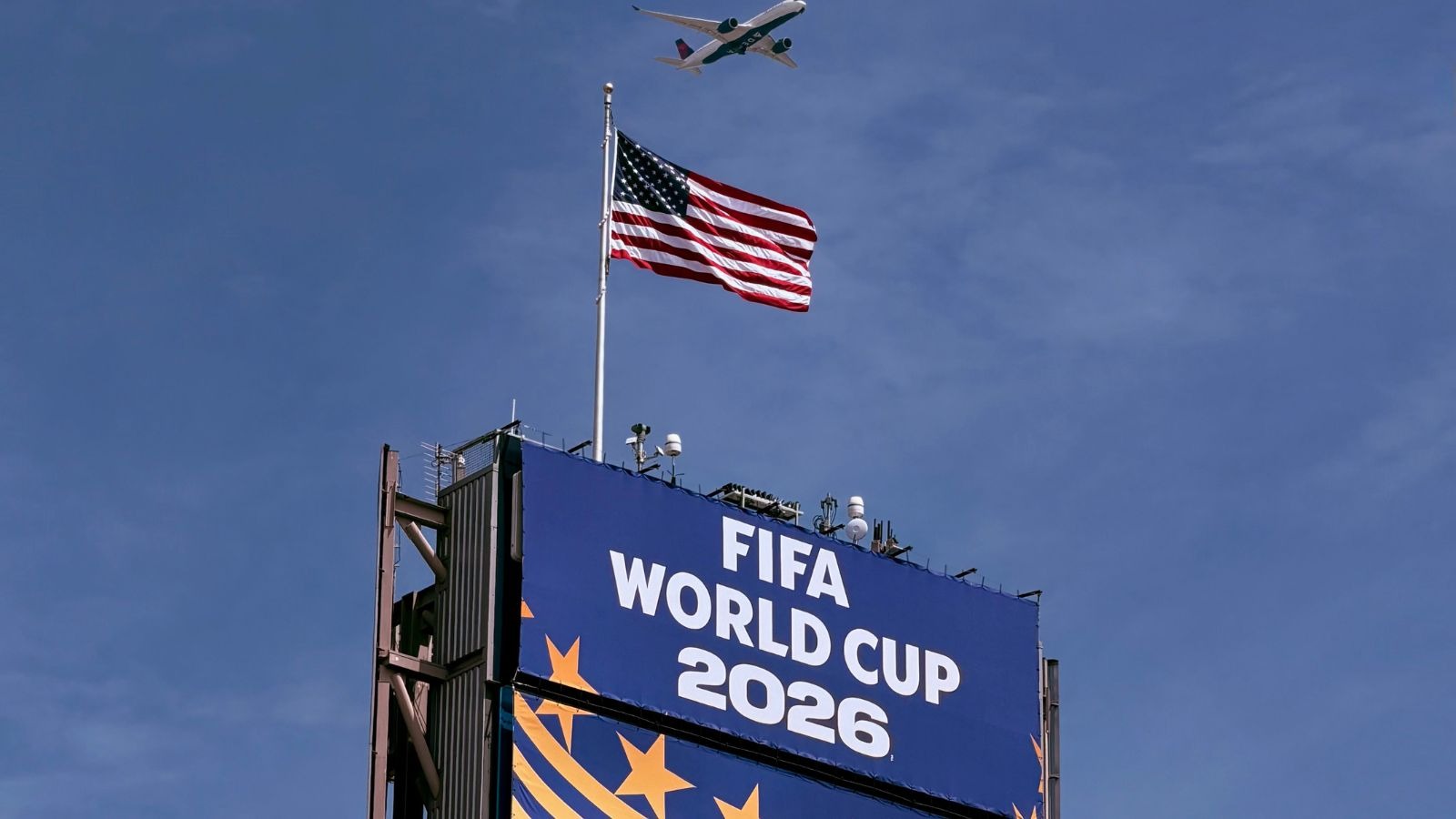
Hosting this year’s FIFA World Cup has already had a significant impact on the sports betting industry in the United States, with the tournament projected to generate a record-breaking domestic handle of $2.9 billion. This betting surge is more than double the volume that was recorded during the 2022 FIFA World Cup in Qatar and marks the first time the American sports-betting infrastructure will be tested to its limits.
The 2026 FIFA World Cup is now well underway and as the expanded 48-team tournament unfolds, the large influx of casual viewers is colliding with the mature American sports betting infrastructure and putting it to the test. The boundaries that once limited soccer’s commercial footprint across the USA have become obsolete as FIFA fever has overtaken the nation.
Between eliminating time-zone barriers and driving an explosive growth in micro-betting and localized World Cup 2026 Betting Odds, this tournament has marked a permanent shift in how Americans connect with the beautiful game.
Eliminating the Friction Caused By Time-Zones
For the longest time, the biggest obstacle that prevented the United States from being able to sustain a significant betting handle on International soccer was the schedule. The previous tournaments that were hosted in Europe, Asia or the Middle East required viewers from the West Coast to log into sportsbooks before dawn, while the East Coast matches were prone to kicking off during the morning commute.
With matches being played across 16 North American host cities, this year’s tournament is perfectly aligned with the peak local viewing hours and the primetime broadcasts have completely dissolved the effort of engagement, turning casual spectators into active bettors at the click of a button.
For the major sportsbooks, the home-soil advantage has also given them the macroeconomic advantage of beating the typical summer slump. This tournament has become a vital high-volume anchor during a period that’s normally dormant for sports betting because both the NBA and NFL are inactive.
Accessing The Demographic of First-Time Soccer Bettors
The physical proximity of the World Cup has led to an unparalleled wave of customer acquisition for the major sportsbooks. Industry tracking data has revealed that an unbelievable majority of Americans who are placing bets on this tournament have never bet on soccer before.
Even the most casual sports fan becomes a die-hard when the tournament is being held in their country and this phenomenon is tied directly to the national team’s performance. In years past, an early exit of the United States Men’s National Team (USMNT) always resulted in an immediate, sharp decline in local sportsbook traffic.
But now that the tournament has been expanded to include 104 games, there’s a consistently high volume of available betting markets. If the USMNT manages to secure a deep knockout run, the experts are predicting that the total betting handle for the tournament might even end up going as high as $4.4 billion.
The Migration Toward Custom Bet Builders and Analytical Props
The tactical layout you’ll find in the American markets is uniquely different from the European markets. International soccer betting is traditionally dominated by the classic three-way moneylines but American betting has been quite heavily influenced by the highly complex parlay leagues like the NFL and NBA.
The American sportsbooks are seeing their revenue being primarily driven by same-game parlays (SGP) as well as highly granular player props as opposed to straightforward match outcomes.
Nowadays, bettors are constructing custom tickets tracking metrics like:
- Individual shots on target
- Total yellow cards issued per squad
- Total corner kicks within specific match halves
In order to meet this demand for micro-markets, many sportsbooks have integrated live data feeds directly into their user interfaces. The continuous and fluid gameplay of soccer provides a truly unique atmosphere for live betting, especially when you compare it to the stop-and-start nature of American gridiron football.
Regulated Prediction Exchanges Are Becoming More Popular
The FIFA World Cup is also highlighting how the market is slowly migrating away from the traditional fixed-odds sportsbooks toward gamified prediction markets. Some new bettors find themselves bypassing the traditional oddsmakers in favor of contracts that are traded on the regulated financial exchanges.
World Cup-related trading volumes on these sites have surged over $1.5 billion. On these markets, you can buy and sell shares based on highly specific outcomes, like:
- Tournament group winners
- Total goals scored by a country
- Individual player awards
This hybrid model between decentralized finance and sports entertainment has effectively broadened the sports betting industry, capturing a market of retail traders who would otherwise have never signed up to a traditional sportsbook.
Setting a New Standard For Sports Betting
The current FIFA World Cup has already set records for many reasons, but none more impressive than that of the sports betting market. With the unprecedented amount of revenue this massive global event will generate for the sportsbooks, it has surely set a new standard of what you can expect from international sports betting going forward.