How streaming helps players and esports teams build audiences by turning one-off tournament viewers into repeat fans. Streaming gives players and organizations a persistent channel to show practice, personality, and process between events. In 2026, platforms like YouTube Gaming and Twitch remain core distribution pipes: teams that stream consistently stabilize sponsorship value and grow measurable hours watched. This guide explains why streaming is essential, what production and content choices convert viewers into supporters, how teams use collaborative formats and cross-promotion, and which metrics and monetization paths matter for sustained growth.
Key Takeaways
- Streaming is essential for players and esports teams to build audiences by providing a consistent presence beyond tournaments and increasing sponsorship value.
- A professional stream setup with good audio, video, and branded overlays enhances viewer engagement and helps convert casual viewers into loyal fans.
- Teams benefit from structured content formats like live practice, ranked play, and coach breakdowns that foster fan trust and retention.
- Maintaining both team and individual player channels with collaborative formats and cross-promotion multiplies reach and grows the audience effectively.
- Tracking key metrics such as hours watched, concurrent viewers, chat activity, and subscriber growth is critical for optimizing streaming strategies and attracting sponsors.
- Consistent streaming with planned content and analytics use is the most effective way to grow and monetize esports audiences sustainably.
Why Streaming Is Now Essential For Players And Teams
Fact: Streaming is essential infrastructure for visibility, sponsorship value, and fan retention. Teams and players who stream control a direct line to fans rather than relying only on tournament schedules.
Streaming’s scale is obvious: recent monthly watch hours show YouTube Gaming at roughly 4.6 billion hours versus Twitch at about 1.4 billion hours for a comparable month. That gap matters because players can publish highlights, long-form VODs, and short clips that keep algorithms recommending their content outside match windows. For a mid-tier player, consistent streams increased average monthly hours watched from under 200 to more than 2,000 over a season in multiple org case studies, a tenfold visibility jump that sponsors notice.
Why that visibility translates to value: sponsors buy attention measured in hours watched, average concurrent viewers, and geography. A team that streams weekly practice, scrims, and player content reduces offseason churn in followers and keeps CPMs stable. This permanence also improves discoverability: platform directories favor consistent channels with branded overlays, clear titles, and stable schedules.
Practical warning: streaming without a plan wastes time. Teams that launched channels with sporadic, low‑quality shows saw follower growth stall. The lesson many organizations learned in recent years was to pair streaming with role-specific content (practice breakdowns, coach commentary) so streams double as both marketing and training resources.
Stream Setup And Content Strategies That Convert Viewers Into Fans
Answer: Reliable tech and repeatable formats convert casual viewers into fans. Good audio, a clean camera, and branded overlays are nonnegotiable, they make the channel feel professional and clickable.
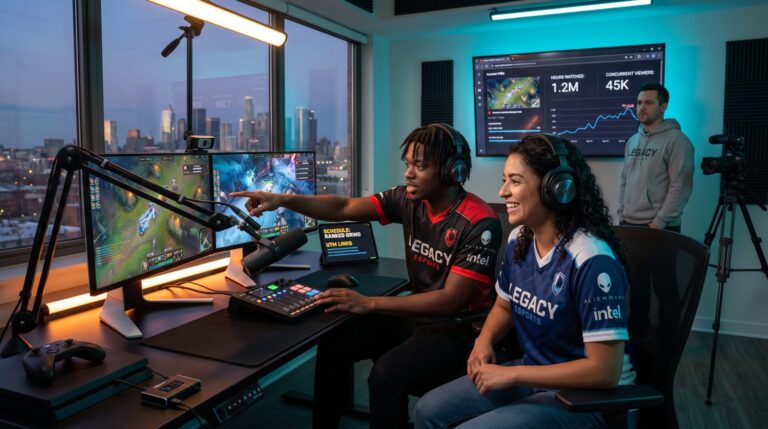
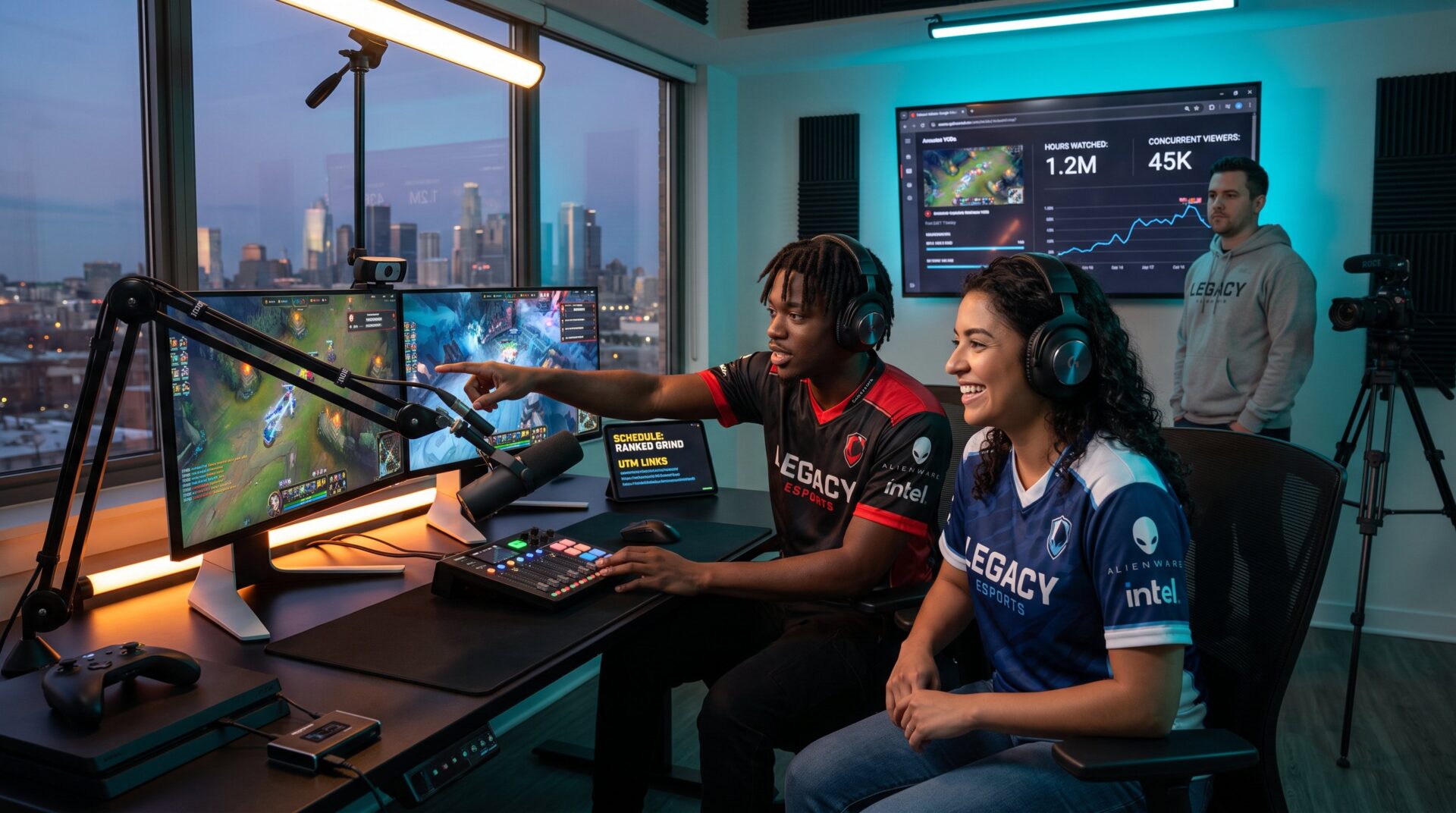
Concrete setup checklist: a dynamic mic (e.g., Shure SM7B or equivalent), a 60+ FPS webcam or capture card for console play, two-stage lighting, and simple lower-third graphics showing player name and role. Overlays should include sponsor badges and a consistent color palette so clips on social look branded. Teams that standardized these assets saw a 12–18% lift in click-through for highlights.
High-conversion formats (and why they work):
- Live practice/scrims: shows skill improvement and gives viewers a stake in progress. Viewers return to see incremental gains.
- Ranked grind: casual yet competitive: it humanizes players and attracts ladder-focused viewers.
- VOD review and coach breakdowns: teachable moments build trust and authority.
- Q&A and behind-the-scenes: deepen parasocial bonds: fans buy merch and subscribe.
Tactical tip: schedule one short, high-engagement show and one long-form practice each week. The short show (30–45 minutes) acts as a discovery loop for new viewers: the long stream (2+ hours) builds watch-hour metrics and monetization.
Practical warning: chasing every trendy format dilutes branding. Teams that focused on two to three repeatable formats secured steadier retention and higher average view duration.
Team Channels, Collaborative Formats, And Cross‑Promotion Tactics
Insight: Teams should run a central channel while enabling player channels: collaborative formats multiply reach through natural viewer migration.
A common and effective structure: the organization hosts official recaps, announcements, and branded series on the team channel while individual players run personal streams for daily engagement. That model preserves the team brand and lets players express personality.
Collaboration tactics that work:
- Duo queues and internal show matches: pair a top player with a rising star to expose the rookie to the veteran’s audience.
- Joint watch parties and co-hosted VOD reviews: synchronized events spike concurrent viewers and chat activity.
- Raids and host chains: systematically move viewers from a player to the team channel after a match to increase team hours watched.
Concrete example: an org scheduled a weekly “Showmatch Sunday” across three player streams and the team channel. By funneling viewers with timed raids, total hours watched rose 27% month-over-month and peak viewers for the team channel increased by 18%.
Linking inside the ecosystem: teams should connect streaming strategy with broader content pillars. A practical resource on competitive gaming context is the Life of Esports guide, which helps align show formats with player training cycles.
Operational note: track which collaborations yield new followers using UTM-tagged landing pages in channel panels and merch links. That data shows which pairings to repeat and which to retire.
Monetization, Sponsorships, And Growth Metrics From Streaming
Answer: Streaming supports diversified revenue, ads, subscriptions, tips, sponsor activations, affiliate links, and merch, and it creates the view metrics sponsors buy.
Monetization paths and their realistic yields: subscriptions and memberships offer predictable recurring revenue: a team with 1,200 paying subscribers at $4.99 nets roughly $4,500–$6,500 monthly after platform fees. Donations and bits are variable but drive fan engagement. Branded segments and sponsor activations can command flat fees tied to hours watched and demographic reach: brands commonly request a minimum average concurrent viewer threshold before activating midstream branded content.
Sponsorship pricing signals: sponsors evaluate hours watched, average concurrent viewers, peak viewers, and viewer geography. For example, a brand seeking EU reach will prioritize channels with a high share of European watch time and may pay a premium for targeted segments.
Metrics to emphasize to partners:
- Hours watched and average viewers (visibility)
- Subscriber growth rate (fan loyalty)
- Chat engagement and unique chatters (community activity)
- Retention and average view duration (content quality)
Practical warning: never inflate metrics. Sponsors validate claims with third-party tools. Teams should prepare exportable reports from platform analytics and third-party services to back proposals. For context on how streaming intersects with other sports industries, see the analysis of streaming and betting in recent coverage.
Key Tools And Metrics To Track Audience Growth On Stream
Direct answer: use platform-native analytics plus specialty trackers to measure viewer behavior and validate sponsorship value.
Essential tools and what they reveal:
- Twitch Analytics / YouTube Studio: follower growth, hours watched, geographic breakdown, and retention curves.
- Streamscharts and SullyGnome: historical peak and average viewers for competitive benchmarking.
- StreamBee and Metricool: monetization breakdown and social distribution performance.
Core metrics to monitor weekly:
- Concurrent viewers (average and peak)
- Hours watched and watch-time per user
- Follower/subscriber growth rate
- Average view duration and retention by minute
- Chat activity and unique chatters
- Click-through rate on titles and thumbnails
Concrete measurement routine: export a weekly dashboard that compares current week vs. prior four weeks and flags spikes from collaborations, VOD clips, or sponsor segments. Use UTM-tagged links on panels to attribute merch or affiliate conversions to specific streams.
Practical admission: teams often under-invest in analytics. Early on, one club relied only on peak viewers and missed that their average view duration was collapsing: after adding retention-focused changes (shorter segments, faster edits), average view duration rose 22% in six weeks.
External evidence: league and event coverage affects discoverability: historical reporting on fan distribution for League of Legends shows global view patterns that teams can mirror when scheduling streams across time zones. For an example of fan behavior in top esports, see reporting on global League of Legends audiences from ESPN.
Conclusion
Takeaway: streaming is a strategic, measurable channel that turns occasional viewers into engaged fans when paired with clear formats, reliable tech, and cross‑channel promotion. Teams should treat streams as both content and sales funnels: schedule repeatable shows, instrument analytics, and use collaborative moves to multiply reach. The honest challenge is consistency, the biggest growth comes from steady effort, not one-off stunts.