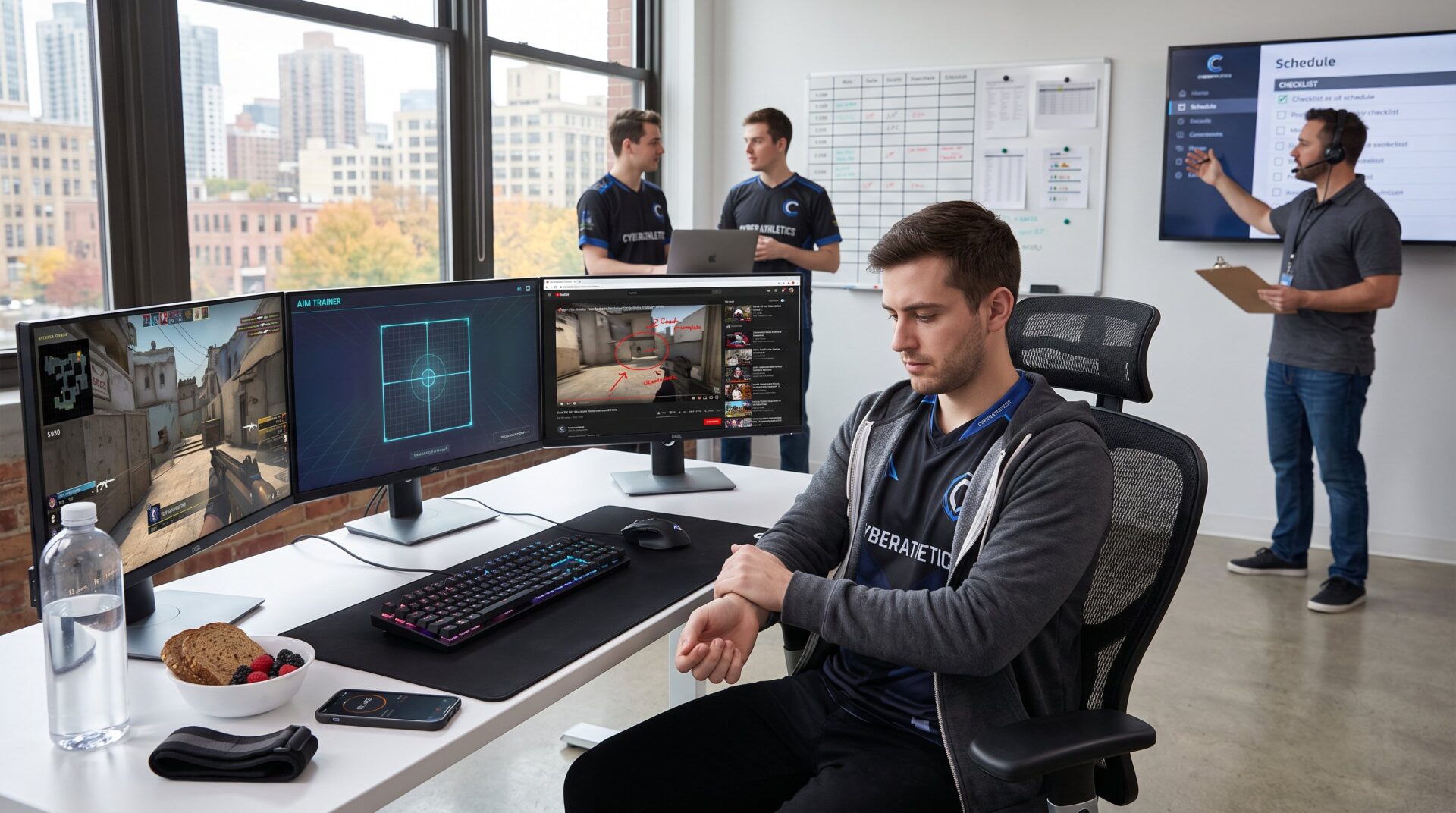
What a Typical Training Day Looks Like for an Esports Player starts with clear structure: pros treat practice like a sport, scheduling 6–12 hours of focused work that mixes physical care, individual drills, team scrims, and review. Readers learn the rhythm, the surprising micro‑habits that protect wrists and focus, and why split-second decisions come from repeatable routines. This article breaks the day into actionable blocks so coaches, aspiring players, and curious fans can see exactly how time is spent and why each block matters.
Key Takeaways
- A typical esports player’s training day involves 6–12 hours of structured practice combining physical care, individual drills, team scrims, and video review.
- Splitting training into focused blocks like warm-ups, individual skills, team strategies, and recovery helps prevent cognitive fatigue and repetitive strain injuries.
- Morning routines prioritize physical warm-up, hydration, and nutrition to enhance focus and reduce injury risks during long practice sessions.
- Mental preparation and explicit goal setting before practice improve focus and reduce performance errors during gameplay.
- Core practice sessions separate individual skill development from team scrims, using measurable metrics to track progress and inform coaching.
- Regular breaks, eye care, wrist mobility exercises, and consistent sleep hygiene are crucial for sustaining long-term performance and health in esports.
Daily Schedule Overview: How A Full Training Day Is Structured
A pro’s day centers on deliberate hours: most teams log 6–12 hours of intentional practice. They divide time into clear blocks: warm‑up, individual mechanical work, team scrims, VOD review, strategy meetings, and physical recovery. Typical timing looks like this: a 30–60 minute morning warm‑up, two 1–2 hour individual sessions, 3–6 hours of team scrims split with strategy breaks, 60–120 minutes of VOD analysis, and short recovery windows including physical training.
Why this structure matters: splitting tasks reduces cognitive fatigue and prevents repetitive strain. The split allows players to focus on one skill set at a time, aim, positioning, communication, while coaches track progress with measurable goals. An ESPN report quantified the long hours many pros put in, reinforcing that elite performance is a volume game plus quality practice.
Teams often use daily checklists and timers. A coach might set four concrete objectives for a day (mechanical target, communication metric, set‑play execution, and VOD insight) and measure them after scrims. This clear, time‑boxed design reduces wasted practice time and keeps the team accountable.
Morning Routine: Starting The Day Right
Morning routines prepare body and mind. Pros usually wake between 8:00 and 11:00, depending on travel and match schedule, and begin with light movement and hydration to prime cognition. The first hour is short but decisive: mobility, a protein‑rich meal, and a focused warm‑up set the tone for the day.
Teams treat morning as a reset. Players log quick health checks, wrist soreness, sleep quality, and mood, so coaches can adapt practice load. A concise morning plan prevents cascading issues later in the day and increases the chance scrims go smoothly.
Physical Warm-Ups, Nutrition & Hydration
Players start with 15–60 minutes of physical prep aimed at preventing injury. The clear fact: simple mobility reduces wrist and back pain. Typical routines include wrist stretches, shoulder mobility, neck releases, and 10 minutes of light cardio. Teams often follow a prescribed sequence from physiotherapists to protect repetitive‑motion joints.
Nutrition follows a precise pattern. Players favor balanced breakfasts: whole grains, eggs or lean protein, fruit, and steady water intake. One pro example: 40 grams of protein, a cup of oats, and 500 ml of water on waking. Hydration continues through practice: many players track water with a 1‑liter bottle over the first three hours. Coaches note that small, consistent meals every 3–4 hours keep reaction time stable and reduce mid‑session drops in focus.
Warning: skipping mobility or de‑hydrating before long scrim blocks increases injury risk and reduces reaction speed. Teams that track these metrics see fewer mid‑season injuries and steadier performance on match day. This context pairs well with the overview guide for readers who want more detail.
Mental Prep, Goal Setting & VOD Review
Fact first: mental prep tightens focus and lowers tilt. Pros use 5–15 minute rituals, breathing, visualization, or a short meditation, before hitting aim trainers. They set explicit goals for the day: one mechanical target, one communication goal, and one team objective.
VOD review is deliberate and evidence‑driven. Teams spend 60–120 minutes analyzing previous scrims and matches. Analysts clip moments where positioning failed, where cooldowns were mistimed, or where a communication chain broke. Players receive 3–5 highlighted clips and one concrete corrective action to practice in the next drill block. This targeted feedback loop reduces repetition of the same errors.
A common vulnerable moment: a player who reviewed clips without a plan often repeated mistakes. Teams that pair clips with a single corrective drill see faster improvement.
Core Practice Blocks: Individual Work, Team Scrims And Focused Drills
Core practice delivers most skill gains. The simple truth: separate individual mechanics from team dynamics. Morning and early afternoon often contain 1–2 hour individual blocks focused on aim, movement, or role‑specific tasks. Later, teams schedule 3–6 hours of scrims with coaches and analysts guiding adjustments.
During individual blocks, players use aim trainers, custom maps, and role drills. A top player might do a 90‑minute session split into 30 minutes of raw mechanic drills, 30 minutes of situational scenarios, and 30 minutes of solo queue or VOD‑driven practice. Coaches track metrics like hit percentage, reaction time, and error rate to quantify progress.
Team scrims are structured with purpose. Scrims run in sets, three 30–45 minute matches with 15 minute reviews between sets. Coaches call timeouts to address repeated mistakes and run micro‑workshops on communication cues or set plays. This format creates short feedback loops and lets teams iterate on tactics within a day.
Teams also monitor fatigue. If a player’s mechanical metrics drop by 10–15% across a block, staff insert recovery: brief physical breaks, eye rest, or a switch to low‑intensity analysis tasks.
Individual Skill Work, Team Scrims And Recovery Breaks
After core blocks, players return to targeted solo work and recovery. The core fact: recovery sustains long‑term output. Typical evening routines include a second individual block of 60–120 minutes, focused on polish: map study, combo repetition, and clutch scenarios.
Scheduled breaks are precise. Teams timetable 10–20 minute breaks every 60–90 minutes for meals, a short walk, or eye rest. One team tracked that 15‑minute walks between scrim sets raised post‑break focus by measurable amounts. Players use blue‑light filters, follow 20‑20‑20 eye rules (every 20 minutes look 20 feet for 20 seconds), and do wrist mobility between sets.
Coaches and analysts link practice to tools: a player might consult a team structures overview to understand role overlap, or review analyst notes on communication by opening a short clip from the coaching folder. These contextual resources make solo drills more directly relevant to team play.
Recovery extends to sleep hygiene. Teams encourage consistent bedtimes and pre‑sleep wind‑down rituals so cognitive recovery is reliable before the next heavy day.
Conclusion
A typical pro day pairs long hours with clear purpose: structured warm‑ups, focused individual work, long but disciplined scrim blocks, targeted VOD review, and recovery. That combination, volume plus specificity, creates the split‑second decisions fans see in matches and the durable health that keeps players in the scene. For deeper context about life in competitive gaming and the routines teams follow, consult the life of esports overview and related articles on coaching and hardware.